Common BHEC Mistakes That Can Delay Your LCSW in Texas
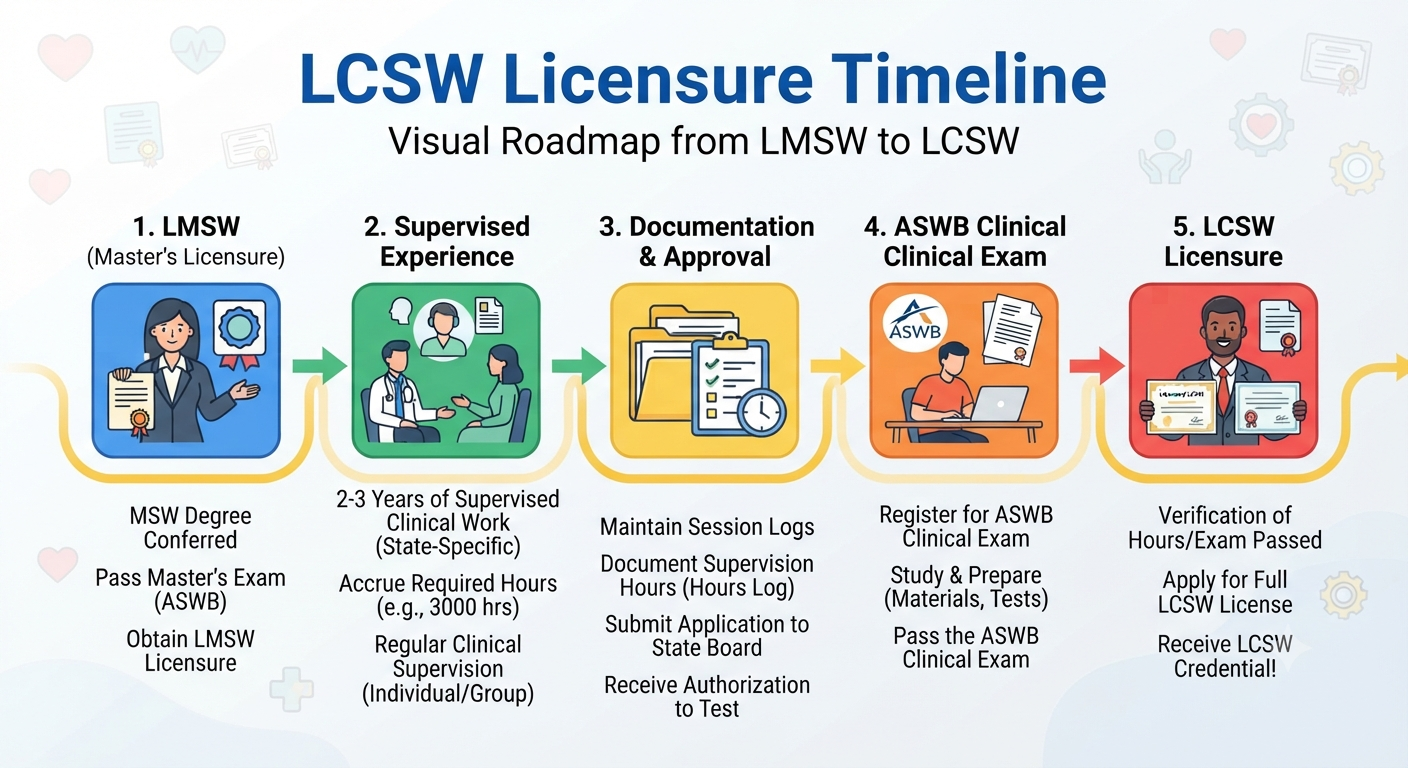
Earning your Licensed Clinical Social Worker (LCSW) credential is an important professional milestone. By this point, you've completed your social work education, earned your LMSW, and begun developing your clinical skills through supervised experience.
The LCSW process involves more than completing clinical work. You'll also need to keep track of supervision, clinical experience, documentation, examinations, and application requirements.
Some problems can be prevented by understanding the requirements early and keeping your records organized throughout supervision.
Here are common mistakes Texas LMSWs should watch for while working toward LCSW licensure.
Why Paying Attention to BHEC Requirements Matters
Texas LCSW licensure involves several requirements that need to be completed and documented.
For example, an LMSW seeking an LCSW must complete:
At least 3,000 hours of supervised professional clinical experience
At least 100 hours of supervision
At least 24 full months of supervised experience
The ASWB Clinical Examination
Other application requirements established by BHEC
Supervision and clinical experience also need to be documented appropriately.
Because licensing requirements can change, it's important to verify current information directly with the Texas Behavioral Health Executive Council (BHEC) rather than relying on older information or advice from other clinicians.
Mistake #1: Waiting Too Long to Learn the Requirements
One of the easiest mistakes to make is assuming you'll figure out the LCSW requirements as you go.
Before or early in your supervision experience, become familiar with the current requirements for:
Supervised clinical experience
Supervision
Supervision documentation
Required examinations
Application documentation
Changes in employment or supervision
You don't need to memorize every BHEC rule. You should know where to find the current requirements and understand which parts of the process apply to you.
BHEC's requirements for LMSWs seeking an LCSW are a good starting point.
Mistake #2: Assuming Someone Else Is Keeping All Your Records
Your supervisor and employer may maintain important records, but you should also understand what documentation exists and how you can access it.
Keep your own organized copies of important information, such as:
Your supervision plan
Supervision documentation provided to you
Employment information
Records of your clinical experience
Important correspondence
Copies of forms or documentation submitted as part of your licensure process
BHEC states that an LMSW can request a copy of their supervision file from their supervisor.
Keeping your own records can also make it easier to identify missing information before you're ready to apply.
Mistake #3: Waiting Too Long to Review Your Supervision Records
Documentation becomes harder to reconstruct when you wait until the end of your supervision period.
Review your records periodically and make sure you understand:
When your supervision sessions occurred
How much supervision you've completed
How your clinical experience is being tracked
Whether your current supervision arrangement reflects your work
Texas rules require supervision documentation to include information such as the date, duration, and content of supervision sessions.
Your supervisor is responsible for maintaining the supervision file, but staying aware of your own progress can help you identify questions earlier.
Mistake #4: Treating Supervision Like a Checklist
Clinical supervision isn't simply a matter of accumulating hours.
Your supervision can also be a place to discuss:
Challenging clinical cases
Assessment and diagnosis
Treatment planning
Ethical questions
Documentation
Clinical reasoning
Professional development
Questions about your clinical work
Bring questions to supervision instead of waiting for your supervisor to determine what you need to discuss.
The more actively you participate, the more opportunity you have to connect your clinical experiences with your professional development.
Mistake #5: Waiting Until the Last Minute to Ask Questions
If you're uncertain about something related to your supervision or clinical role, don't wait until you're preparing your LCSW application to bring it up.
Questions may involve:
Clinical experience hours
Supervision
Documentation
Employment changes
Changes in job responsibilities
Your supervision plan
Practice settings
Ethical concerns
Some questions can be resolved quickly when they're addressed early. Others may require additional documentation or clarification.
Your supervisor can help you identify questions that need attention, while BHEC remains the appropriate source for current licensing requirements.
Mistake #6: Not Communicating With Your Supervisor When Your Role Changes
Your supervision arrangement should reflect your actual professional work.
If your employer, job responsibilities, supervision goals, or method of supervision changes, bring the change to your supervisor's attention.
Under current Texas rules, the supervisor is responsible for updating the supervision plan when there is a change in the agency of employment, job function, supervision goals, or method of supervision.
This is particularly important when your position includes both clinical and non-clinical responsibilities.
Don't assume that a new role automatically fits within your existing supervision arrangement. Talk with your supervisor and review what needs to be updated.
Mistake #7: Focusing Only on Completing Hours
It's easy to become focused on the number of hours remaining.
But supervision is also an opportunity to develop your clinical judgment.
Use your supervision time to explore questions such as:
Why did I choose this intervention?
What information supports my clinical assessment?
What am I noticing in the therapeutic relationship?
Are there ethical considerations I need to address?
What could I approach differently?
What feedback can I apply to my next case?
The goal isn't simply to finish supervision. It's to develop as a clinician while you're completing your supervised experience.
Mistake #8: Waiting Too Long to Think About the ASWB Clinical Exam
The ASWB Clinical Exam is part of the Texas LCSW licensure process, so it's worth becoming familiar with the exam before you're ready to sit for it.
That doesn't mean you need to spend your entire supervision period studying for the exam.
Instead, use clinical learning opportunities to strengthen areas that also appear in the current exam content, including:
Assessment
Diagnosis
Treatment planning
Interventions
Ethics
Human development and behavior
When you eventually begin dedicated exam preparation, having a strong clinical foundation can give you more context for the material you're reviewing.
ASWB's current exam content and 2026 blueprint should be your primary sources when planning your preparation.
Mistake #9: Losing Track of the Timeline
Texas requires supervised professional clinical experience to extend over at least 24 full months.
That means reaching 3,000 hours isn't the only consideration when you're planning your timeline.
Your progress can also be affected by:
Changes in employment
Changes in clinical responsibilities
Reduced clinical hours
Time away from clinical work
Changes in supervision
The pace at which you accumulate qualifying clinical experience
Review your progress periodically instead of assuming that your timeline will remain unchanged from the beginning of supervision.
Mistake #10: Assuming Every Clinical Hour Automatically Counts
Having a clinical-sounding job title doesn't automatically determine whether all of your work counts toward LCSW licensure.
Texas rules define clinical social work and establish requirements for supervised professional clinical experience.
If your position includes a mixture of clinical and non-clinical responsibilities, talk with your supervisor about how those responsibilities are documented and supervised.
BHEC's rules also address clinical experience in settings that may not be exclusively clinical, including circumstances involving clinical social work performed for at least four hours per week.
If you're uncertain whether your particular experience qualifies, don't assume. Review the current BHEC requirements and seek clarification before relying on those hours.
Mistake #11: Forgetting That Requirements Can Change
Licensure information found in an old blog post, social media group, study guide, or conversation with another clinician may no longer reflect current Texas requirements.
Make a habit of checking official BHEC resources when you're making decisions about:
Supervision
Clinical experience
Applications
Examinations
Required forms
Licensure requirements
Your supervisor can help you understand how requirements relate to your supervision experience, but BHEC is the authoritative source for current licensing rules and requirements.
How Quality Clinical Supervision Can Support the Process
A strong supervision relationship isn't a substitute for reviewing BHEC requirements yourself.
It can, however, give you a place to discuss questions about your clinical work, professional development, supervision progress, and changes in your role.
During supervision, you may have opportunities to:
Review challenging cases
Discuss clinical reasoning
Ask questions about documentation
Talk through ethical concerns
Reflect on feedback
Discuss changes in your clinical responsibilities
Prepare for the transition toward independent practice
The administrative side of licensure and the clinical side of professional development don't have to be completely separate. Good supervision can give you space to address both.
Frequently Asked Questions
Can administrative mistakes delay LCSW licensure?
Problems with documentation, incomplete information, or misunderstanding current requirements can create complications during the licensure process. However, the specific effect depends on the situation. If you're concerned about a particular issue, review the current BHEC requirements and discuss it with your supervisor.
Should I keep my own supervision records?
Yes. BHEC states that an LMSW can request a copy of their supervision file from their supervisor. Keeping your own copies of important documents can also help you stay aware of your progress.
How often should I review my supervision records?
There's no need to wait until the end of supervision. Reviewing your progress periodically can help you identify missing information, changes in your clinical role, or questions that need to be addressed.
When should I start preparing for the ASWB Clinical Exam?
You can become familiar with the current exam content while you're completing supervision, then move into more focused exam preparation as you approach the examination stage. Use the current ASWB content outline and examination materials rather than older study resources.
What if my job responsibilities change?
Tell your supervisor when your agency, job function, supervision goals, or method of supervision changes. Under the current Texas rules, the supervision plan should be updated when these circumstances change.
What if I'm not sure whether my clinical hours count?
Don't assume. Review the current BHEC requirements and discuss your responsibilities with your supervisor. If your role includes both clinical and non-clinical duties, accurate documentation of those responsibilities is particularly important.
Clinical Supervision for Texas LMSWs
Working toward your LCSW takes time, and your supervision experience can be an important part of that process.
I provide virtual clinical supervision for eligible Texas LMSWs, with space to discuss clinical cases, professional development, supervision questions, and the transition toward LCSW licensure.
Current Availability
Current Clinical Supervision Groups
Wednesday Clinical Supervision Group
Wednesdays | 4:00–6:00 PM
Virtual | Texas LMSWs
Limited spots remain
Tuesday Evening Group
Tuesdays | 6:00–8:00 PM
Virtual | Texas LMSWs
Currently full
Official BHEC Resources
For current Texas social work licensing requirements, supervision information, and forms, review the Texas Behavioral Health Executive Council's official resources.
BHEC requirements for LMSWs seeking an LCSW
BHEC Social Work FAQs
BHEC Supervision FAQs
BHEC Social Work Forms and Publications
BHEC 2026 Social Work Rulebook
Important Note
Texas licensure requirements and BHEC rules can change. Always verify current requirements directly with the Texas Behavioral Health Executive Council and review the rules and forms that apply to your individual situation.